 Maze BJJ
To compete, or not to compete, that is the question
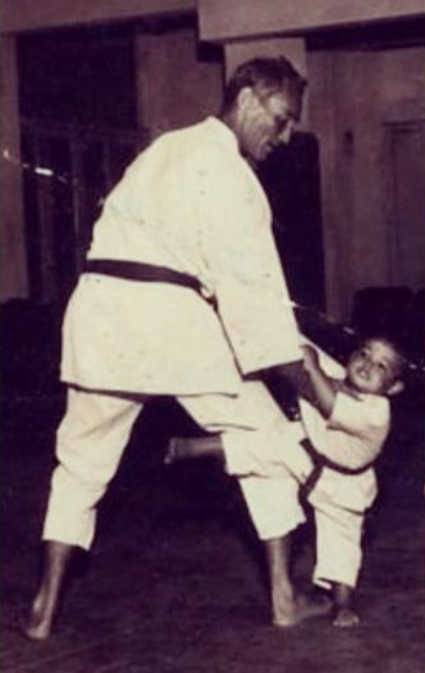 Grand Master Helio Gracie and his son Rickson Gracie.
When Master Rickson Gracie competed for the very first time as a child, his father, Grand Master Hélio Gracie, gave him a simple but profound challenge. He told Rickson that if he won the match, he would get one chocolate — but if he lost, he would get two.
Rickson went out there, gave his best… and lost the fight.
True to his word, Hélio gave him two chocolates. But more importantly, he gave his son a lesson that would last a lifetime: that winning was not the most important thing.
What truly mattered was the courage to face challenges, to step onto the mat, and to put his training to the test. The real victory was learning to respond under pressure — physically and mentally — to stay calm, to act decisively, to manage emotions, and to turn discomfort into growth.
Competition, therefore, is not an end — it’s part of the learning process.
A Jiu-Jitsu practitioner competes not just to win medals, but to evolve: to become stronger, sharper, and more resilient. That’s why the idea that one must be fully prepared before competing doesn’t make much sense. Whether you’re a beginner white belt or a seasoned black belt, competition itself is a tool for progress.
Of course, we all want to win. Standing on the podium, holding a gold medal, celebrating with your teammates — it’s an amazing feeling. But ultimately, competition benefits you more than anyone else. No matter the outcome, you’ll walk away better, stronger, and more experienced.
That said, there is no obligation to compete. It’s not part of our belt promotion criteria, and many people simply don’t enjoy it — and that’s perfectly fine.
If you’d like to compete, no matter your level, just send me a message.
If competition isn’t for you, don’t worry — it will never hold you back on this beautiful Jiu-Jitsu journey.